Tuesday, 30 October 2018

Google Launches Discover to Clutter Up Its Homepage

Google is rolling out the new Discover feed on mobile. This will allow you to discover more information—and find more relevant information—right from the Google homepage before you’ve even searched for anything. Or at least that’s the plan.

Historically, the Google homepage has mostly been free of clutter. It’s comprised mostly of white space, with the Google logo front and center, and the all-important Search box at its core. But Google is now changing things up, at least on mobile.

Google Launches Discover on Mobile

In September, Google announced Discover. This is the new name for the Google feed, which hundreds of millions of people already use. Discover is a step up from the Google feed, with more topics and types of content, and new ways to personalize the experience.

In a nutshell, the Google homepage will now be populated with cards containing information Google thinks will interest you. This will be based on your search history and preferences, so Discover will evolve over time as you search for more things.

You’ll see news articles, sports results, YouTube videos, photo galleries, and more. You can finetune your Discover feed by clicking on the menu for each card. You can then indicate you’re not interested in the topic, block the site being mentioned, and more besides.

As well as the option to customize your Discover feed, you can also disable it altogether. Just click on Settings, then Discover, and choose either “Don’t show on homepage” or “Turn off Discover” either using the app or a web browser.

Google Takes a Risk on Information

This is a risky move by Google. People are used to the homepage being clean and clutter-free, so populating it with cards could prove to be overwhelming, or, dare I say it, annoying. So it’s a good job you can customize Discover or even turn it off altogether.

Discover is currently only available on mobile in the United States. So if you visit Google.com using Chrome or Safari you should see your feed taking shape. Which makes this the perfect time to read our definitive guide to Google Search.

Image Credit: Caccamo/Flickr

Read the full article: Google Launches Discover to Clutter Up Its Homepage


from MakeUseOf https://ift.tt/2qfB9M2
via IFTTT

How to Install Ubuntu on Windows 10: 3 Simple Methods to Try

ubuntu-windows

You want to install Ubuntu on your Windows computer, don’t you? But maybe you aren’t 100 percent certain that you want to commit just yet. What if something goes wrong?

Fortunately, there are many ways in which you can try Ubuntu Linux and see whether you really like it, from running a Live CD to installing the OS in a virtual machine, before going all the way and installing it alongside Windows in a dual boot setup.

You might end up abandoning Windows altogether, but it’s good to get a taste before you dive all the way. Here are the best ways to install Ubuntu on your Windows 10 device.

Are You Ready to Switch?

The first thing to do is work out whether or not you’re ready to switch to Linux. That you’re reading this is a good sign that you have strong inclination to try out Linux, and the ideal place to start is with Ubuntu.

While Linux isn’t identical to Windows, Ubuntu is the most accessible Linux distribution, offering both an intuitive user interface and a solid package manager.

If you’re feeling particularly brave, you might have spent some time thinking about how to use Ubuntu as your new, main operating system, replacing Windows entirely. For this, you will need to understand how you can migrate your data from Windows to Ubuntu, assuming that is the version you’re going to be switching to.

Which Linux Version Should You Choose?

As you’re probably aware, several flavors of Linux are available. Some are intended for hardcore enthusiasts, while others come with a Windows-esque user interface, designed to help newcomers to the platform ease their way in.

Ubuntu is a happy medium between the two types of Linux distribution, and while the remainder of this guide applies specifically to Ubuntu, there is no reason why you shouldn’t take a look at our list of the best Linux distributions and try some alternatives.

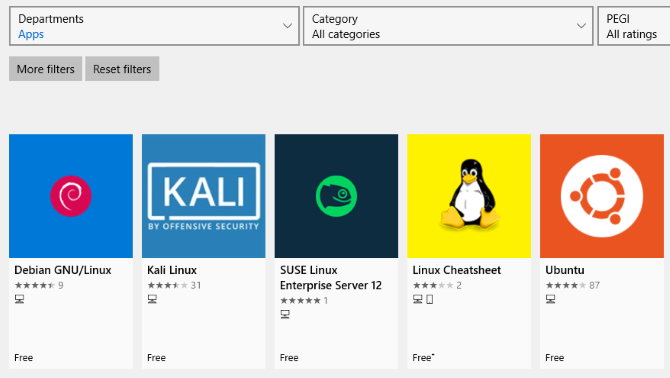
With the arrival of Windows Subsystem for Linux, you can run Linux on your Windows 10 computer with little effort. Several Linux distros are available as apps in the Microsoft Store, such as Ubuntu, Debian, SUSE Linux, and even the Kali Linux penetration testing OS.

Install Ubuntu Linux From the Microsoft Store

To install any version of Linux on Windows, you’ll first need to install the Windows Subsystem for Linux.

Enable Windows Subsystem for Linux

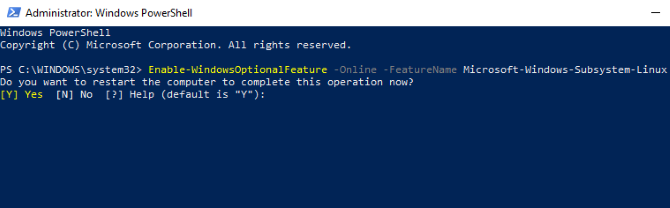
Right-click Start and open Windows PowerShell (Admin), then enter this command:

Enable-WindowsOptionalFeature -Online -FeatureName Microsoft-Windows-Subsystem-Linux

Wait while the process completes, then when prompted, enter Y to restart your computer.

Linux distro apps in the Windows Store

With Windows running again, download and install your preferred distro from the Windows Store. (This works with Windows build 16215 and later. For the best results, upgrade Windows to the latest version.)

This will take a few moments. Once done, launch the Linux app and wait while it finalizes the installation.

Explore the Linux environment in Windows

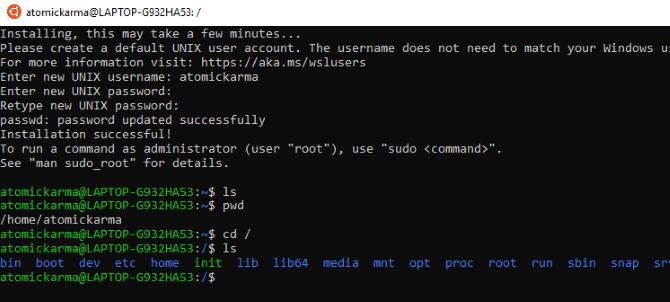
Once this is done, you’ll be prompted to create a UNIX account by inputting a new username and password. These don’t need to be the same as your computer’s account.

The installation will then complete, and you’ll have a wide selection of bash commands at your disposal. Time to play with Linux from within Windows!

Install Ubuntu Linux With a Live CD or Virtual Machine

If you want a Linux desktop environment, the Windows Subsystem for Linux isn’t going to cut it. Instead, you’ll need to think about using a live CD, a virtual machine, or even dual-booting Linux with Windows.

After downloading Ubuntu, write it to CD or USB. Before installing the OS on your computer, spend time with Ubuntu in its live mode, which enables you to load the OS from the optical disc into your computer’s memory.

Do this by inserting the CD or USB stick, rebooting your PC and selecting Try Ubuntu without any change to your computer from the boot menu. Soon Ubuntu will appear, giving you the chance to try out the apps and become more familiar with everything before making the decision to install.

While some functionality may be missing here, this is the best way to take your first steps towards Ubuntu.

Not all Linux distributions have a live mode, so check the documentation if you’re looking at an option other than Ubuntu.

If you’re happy with what you see, you can proceed with the installation. Our guide to installing Ubuntu from USB explains further.

For ease of switching between Windows and Ubuntu, meanwhile, as well as testing the OS at your convenience without the somewhat inflexible presence of the Live CD (you can’t switch to Windows easily when running a Linux distro from the drive), you may instead consider using a virtual machine.

Using a virtual machine is an easy way to try Ubuntu Linux. If you’d like to go with that option, have a look at our detailed VirtualBox guide.

Dual Booting Windows and Ubuntu Linux

After discovering that you quite like Ubuntu, you may still have reservations about switching completely.

The answer here is to dual boot Ubuntu with Windows, which is essentially done by creating a new partition on your computer’s hard disk drive and installing the Linux OS into it. By doing this, you install Ubuntu alongside Windows, on the same machine.

Following installation, you’ll see a boot menu each time you boot or restart your computer, with your preferred operating system selected using the arrow buttons on the keyboard.

I Don’t Like It: How to Uninstall Ubuntu

In the unlikely event that you realize that Ubuntu Linux doesn’t cut the mustard for you and your productivity takes a terrible nosedive, the best thing that you can do is switch back to Windows.

If you have been using a Live CD or virtual machine so far, this shouldn’t be an issue.

However, if you installed Ubuntu to dual boot alongside Windows, then you might be happier switching back to the primary operating system and deleting Ubuntu from your HDD. Fortunately, this is relatively straightforward and can be done safely, without any loss of data.

The process involves backing up your Linux data to an external device, then switching to Windows to delete the partition and restore the MBR.

Meanwhile, if you decide that actually, yes you do quite like this new OS, you can install Ubuntu as your computer’s sole operating system, ideal for bringing an old computer back to life or enjoying new functionality on a modern device.

Once you’ve got Ubuntu up and running, it’s time to get to grips with the new operating system. See our beginner’s guide to Ubuntu if you need any help.

Read the full article: How to Install Ubuntu on Windows 10: 3 Simple Methods to Try


from MakeUseOf https://ift.tt/2Q2EoBR
via IFTTT

Understanding USB Cable Types and Which One to Use

Convert Everything With WonderFox HD Video Converter Factory Pro

If you often work with video, it’s important to keep a good converter program around. Changing video formats is important to make video files as compatible across devices as possible.

Thankfully, WonderFox HD Video Converter Factory Pro has all your conversion needs covered. Let’s take a look at what this software can do.

Getting Started

Head to the WonderFox Video Converter homepage and click Free Download to download a free version of this utility. It’s a standard installer and should complete in just a few moments.

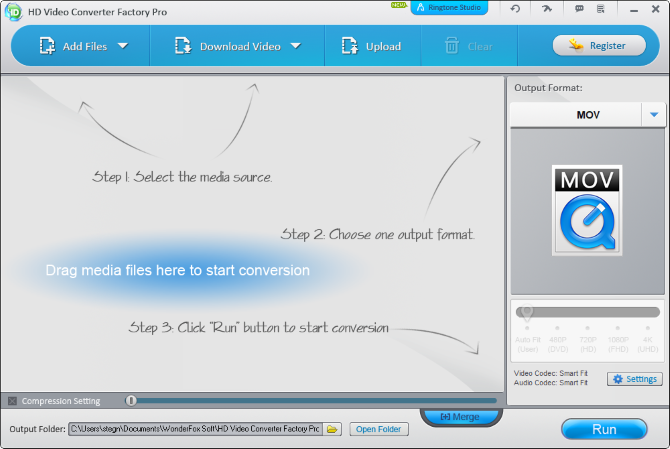
Once it’s done, you’ll see the main Video Converter screen:

Video-Converter-Unregistered-Home

Converting Video

HD Video Converter Factory Pro lets you convert video or audio from either a local file or one you download from the web.

To begin, click Add Files to find the video file on your PC you’d like to convert. You can also click the arrow and choose Add Audios to convert audio only. If you prefer, just drag-and-drop the files you’d like to convert instead.

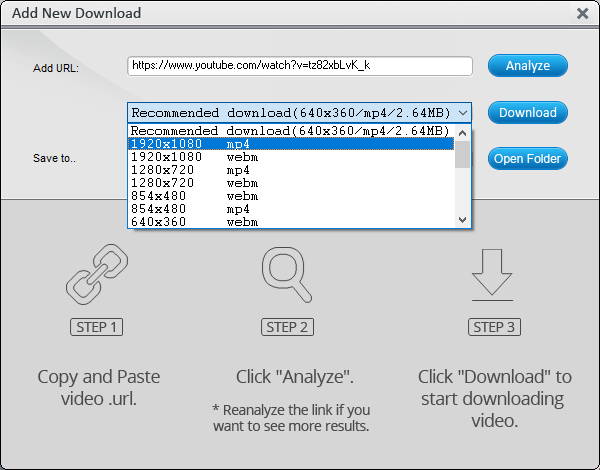
This utility also allows you to download videos from YouTube, Vimeo, and other sites at every quality level. Just click Download Video, paste the video’s URL, and choose Analyze. Once you’ve confirmed, just choose Download to get the video. Then you can convert it.

WonderFox-Video-Download

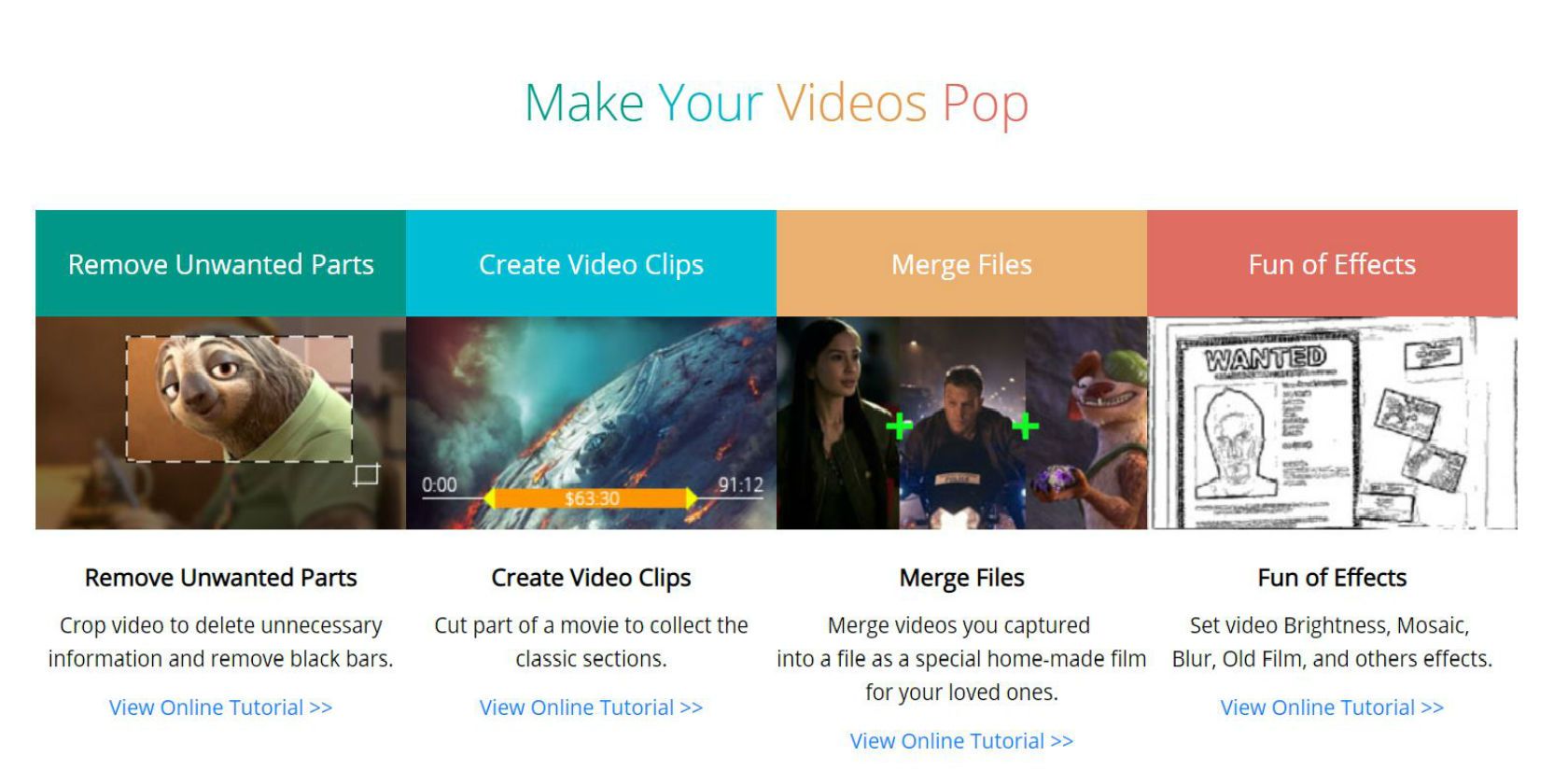
Once you’ve added a video to the conversion list, you’ll find editing options below it to Clip, Crop, and add Effects. There’s also a Merge button at the bottom of the window for combining video files.

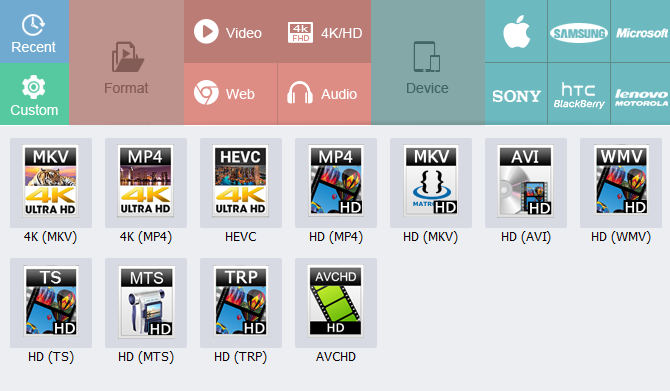
After you’ve got this all set, choose an Output Format on the right side. You’ll see dozens of choices; some are for specific formats (like Web video), while others are for specific devices. After you’ve chosen a preset, you can drag the slider below to adjust the quality and click Settings for even more options.

WonderFox-Quality-Selector

Check the Compression Setting box and drag the slider if you want to compress the video further. After you’ve reviewed everything, click Run and video conversion will begin.

Other HD Video Converter Factory Pro Features

We’ve covered the main uses for WonderFox HD Video Converter Factory Pro, but it has other tricks up its sleeve.

In this version, WonderFox boasts conversion times up to 30x faster than the prior one. This is due to support for hardware encoding, so you can use your AMD or Nvidia graphics cards to handle the heavy lifting.

Due to the large number of supported formats, you can use the tool to convert HD video to SD without a huge drop in quality. You can also upgrade old SD video to a smoother 60FPS.

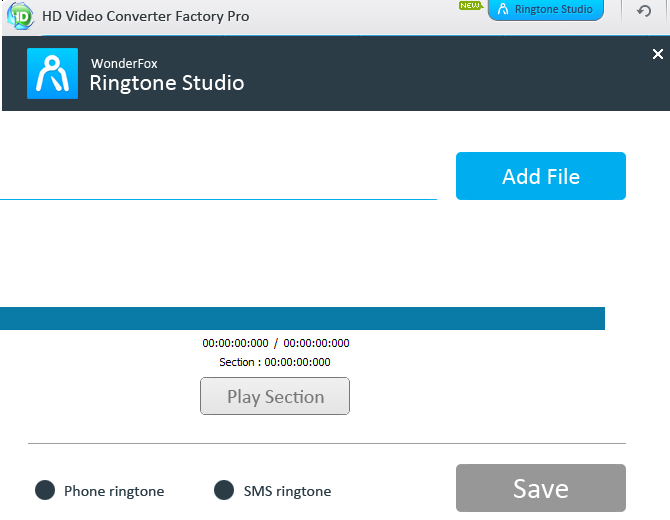
And for even more usefulness, you can try out the new Ringtone Studio feature at the top of the window. This lets you easily create ringtones for your iPhone or Android device.

WonderFox-Ringtone-Maker

Upgrade to the Full Version

You can use the unregistered version of this tool to try it out. This limits you to five minute conversions and five video downloads. But for the full experience, you’ll need to upgrade with a license key. This unlocks all features, including the blazing-fast conversion speed.

Thanks to a special offer, MakeUseOf readers can purchase the software for a special price of $24.95.

Time to Get Converting

Clearly, WonderFox’s HD Video Converter Factory Pro offers a lot of value. If you’re someone who often converts video and needs access to quick downloads and lots of conversion options, this is the tool for you.

Read the full article: Convert Everything With WonderFox HD Video Converter Factory Pro


from MakeUseOf https://ift.tt/2Q2El99
via IFTTT

BritBox vs. Acorn TV: Which Is Better for Streaming British TV?

The major TV channels in the UK frequently produce high-quality dramas, comedies, and thrillers, of which only a small minority ever make it to American shores. This is a crying shame, as there’s a mountain of content out there.

However, thanks to two services—BritBox and Acorn TV—you can now get your hands on (almost) all of it.

Subscribing to both services might be overkill, so you need to know which is right for you. Which is the easiest to use? Which has the best selection of content? And, perhaps most importantly, which has the most content? Keep reading to find out.

BritBox vs. Acorn TV: Background and History

BritBox is a joint venture between the two largest networks in the UK: BBC and ITV. BritBox went live in March 2017, just three months after the two networks announced the project.

As Soumya Sriraman, BritBox president, told Fortune at the time:

“BBC and ITV are known for a vast array of diverse and award-winning programming that fans in the US love and want to watch. BritBox offers a single point of access to an extensive collection of outstanding British programming to discover and enjoy.”

Acorn TV has been around for longer, going live in 2013. RLJ Entertainment Inc. owns and operates the service. Interestingly, one of RLJ’s subsidiaries (Acorn Media Group) has been responsible for distributing UK content in the United States since the mid-1990s. It means the developers behind Acorn TV have a solid understanding of what American audiences enjoy watching.

BritBox vs. Acorn TV: Content Quality

Acorn TV
acorn tv series listings

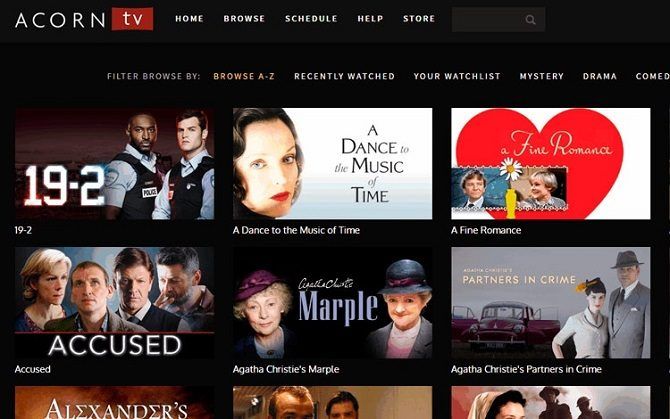
Interestingly, Acorn TV doesn’t only specialize in UK shows. It also carries programming from Ireland, Canada, Australia, and New Zealand. The company has deals in place with some of the largest producers in those countries, including ITV, Channel 4, BBC Worldwide, All3Media, DRG, ZDF, and Content Media Corp.

The content offered can be broadly divided into six areas: mysteries, dramas, comedies, documentaries, feature films, and foreign language shows. Some of the most famous shows from recent years are available, including Doc Martin, Black Books, QI, and Hinterland.

Away from well-known network shows, Acorn TV also makes some original content. Its most successful original show was an adaptation of Agatha Christie’s Poirot in summer 2014. The show remains the only production by a niche streaming service to be nominated for an Emmy. Other original series include Agatha Raisin, Close to the Enemy, The Level, and Striking Out. Acorn TV also owns the rights to popular drama series, Foyle’s War.

Naturally, there’s also a bit of “padding”. We can’t imagine too many people tune into shows like The Yorkshire Vet or The World’s Most Famous Train.

Lastly, Acorn TV also holds the rights to the US premieres of a number of shows, including The Detectorists, Vera, Inspector George Gently, and Midsomer Murders. If you want to be at the front of the queue for new episodes of these shows, Acorn TV is the answer.

BritBox
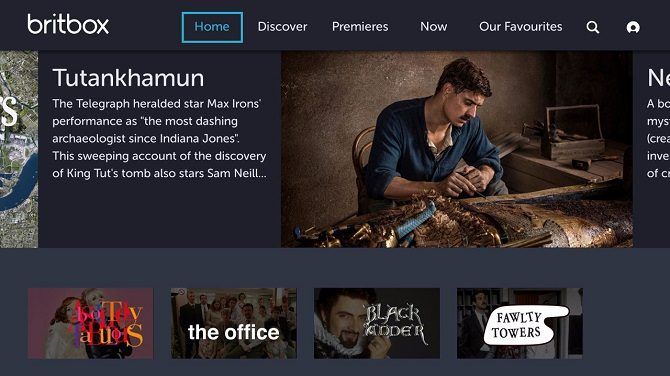
In one sense, BritBox has a narrower focus: it only carries content from BBC and ITV. On the other hand, those two networks are responsible for the majority of quality programming in the UK, so you’re going to get the best of the best rather than a mix of quality output and unwatchable trash.

There are renowned soaps like EastEnders, crime thrillers like Silent Witness and Waking the Dead, long-running family series such as Casualty, and a whole range of famous comedies like The Office (the British version, naturally) and The Vicar of Dibley.

BritBox also excels in its selection of classic British comedies. It carries shows like Porridge, Are You Being Served?, and Fawlty Towers, as well as more recent hits like Absolutely Fabulous and Keeping Up Appearances. The service does not provide any content from BBC America.

BritBox vs. Acorn TV: Content Quantity

Quality and quantity are arguably the two most important metrics when you’re thinking about a streaming service. We’ve covered quality, so what about quantity? After all, you don’t want to run out of things to watch a few months after signing up.

At the time of writing, Acorn TV carries more than 250 different shows and movies. About a quarter of them are movies and there’s also a handful of foreign-language content, so you’ll have around 200 TV series to get stuck into.

Many older shows are represented in full. For example, the seven series of Men Behaving Badly are available, as are the nine series of Foyle’s War, and all 19 series of Midsomer Murders.

BritBox has a similar number of shows. The bulk of them fall under either the Drama or Comedy categories.

In short, both services will keep you fulfilled for a long time. It’s hard to accurately determine the number of hours of programming available, but they both run into several thousand.

Note: The number of shows on both services fluctuates slightly from month-to-month as new shows are added and old ones are removed.

BritBox vs. Acorn TV: User Interface and Experience

The last one of the three big deal-breakers when choosing which of these services are for you is the user interface. There’s no point in having thousands of hours of shows if you can’t quickly find what you want to watch when you want to watch it.

Of these two services, BritBox has the better UI. Acorn TV takes a “no frills” approach. You’ll see all the shows available in a grid. Clicking on a show will give you a brief snippet of information about the series and a link to a trailer (where appropriate). You will find all the seasons and individual episodes further down the page. They use an identical grid to the homepage. There is no further subdivision of the content.

BritBox feels more refined. Although it looks nothing like Netflix, it’s clearly taken pointers from the streaming behemoth. When browsing a particular category, you’ll find shows broken down into subcategories.

Some users have complained about unreliable search results on Britbox, but it doesn’t appear to be a universal issue.

BritBox vs. Acorn TV: Device Support

Acorn TV is available in your browser, and there are standalone apps for both iOS and Android. It also works on three set-top boxes: Roku, Amazon Fire TV, and Apple TV. It’s also one of the many apps that lets you watch TV on a Chromecast.

BritBox is also available in your browser, on iOS and Android, and on Roku, Chromecast, and Apple TV.

BritBox vs. Acorn TV: Other Features

There are a couple of other features (or lack thereof) worth discussing.

Firstly, neither service lets you download videos for offline watching. As such, you can’t rely on either service for long plane journeys or extended periods of time in other countries.

Secondly, neither service supports multiple user profiles. If you have lots of members in your household, you’ll all have to watch through the same portal.

On the plus side, both apps offer closed caption subtitles on all their shows.

BritBox vs. Acorn TV: Pricing and Cost
acorn tv price

While reading this article, you might have started to realize there is very little between the two services. Neither is overly weak in any one area, and both boast several strong points.

As such, your decision may solely boil down to price. And in this arena, we have a clear winner.

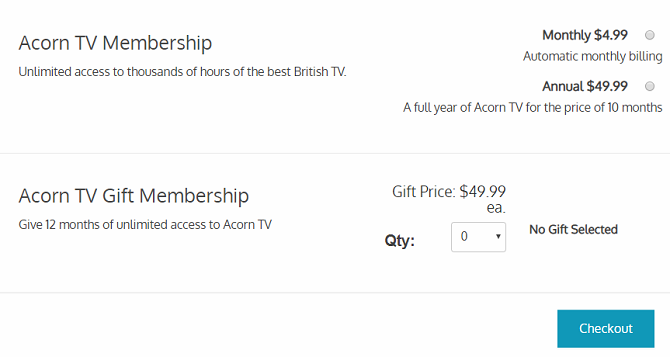
BritBox will set you back $6.99/month, while Acorn TV only costs $4.99/month. Additionally, Acorn TV offers an annual subscription for $49.99/year, saving you 17 percent over 12 months. BritBox offers no annual plan.

BritBox vs. Acorn TV: Regional Availability

Acorn TV and BritBox are available in the United States. Britbox is also available in Canada, though the show line-up is not the same in each territory.

Additionally, Acorn TV is available in much of Latin America, including Argentina, Chile, Colombia, Costa Rica, Ecuador, El Salvador, Guatemala, Honduras, Mexico, Nicaragua, Panama, and Peru.

If you don’t live in a supported country, don’t panic. Neither company blocks traffic originating from VPNs, so if you have a subscription to a VPN provider, you will be able to circumnavigate the geo-blocking. A smart DNS provider will also work.

BritBox vs. Acorn TV: Which Should You Use?

In our opinion, BritBox is slightly better. Yes, there are fewer shows and it costs slightly more, but the quality of the shows is higher and the website is much more enjoyable to use.

However, your personal TV preferences will determine much of your decision. If the shows you want to watch are only available on one of the two platforms, clearly it makes sense to subscribe to that service. If you’re not sure, sign up for a free trial. Both services will give you seven days with no obligation to continue beyond that.

For more great BBC shows, check out our articles revealing the best BBC documentaries on Netflix and the best BBC shows on Netflix.

Image Credit: Adwo/Shutterstock

Read the full article: BritBox vs. Acorn TV: Which Is Better for Streaming British TV?


from MakeUseOf https://ift.tt/2qdHfNc
via IFTTT